The short answer: pick the wallet you already live in
If you sell digital products from Pakistan, your payout will almost certainly land in a mobile wallet — and the two names on every seller's lips are JazzCash and Easypaisa. Here is the honest truth up front: for receiving a shop payout, both work, both are widely accepted, and neither is "wrong". The better choice is usually the wallet you already use every day, with the SIM you already carry and an agent you can already walk to. This guide explains why, what actually differs between them, and how to avoid the traps that cost sellers time and money — without quoting fee tables that will be out of date next month.
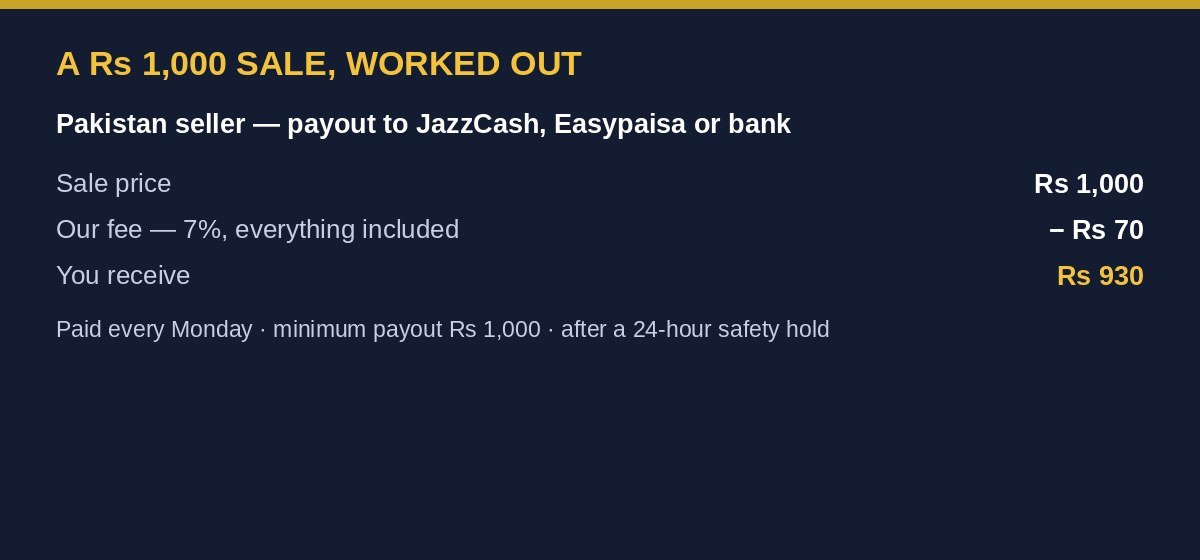
One number never changes on this shop, whichever wallet you choose: a Pakistan seller keeps Rs 930 of every Rs 1,000 sold. Our fee is a single 7% that already includes payment costs, and payouts go out every Monday to JazzCash, Easypaisa or your bank once your balance passes Rs 1,000. So the wallet question is not about our fee at all — it is about what happens to the money after it reaches you.
What the two wallets actually are
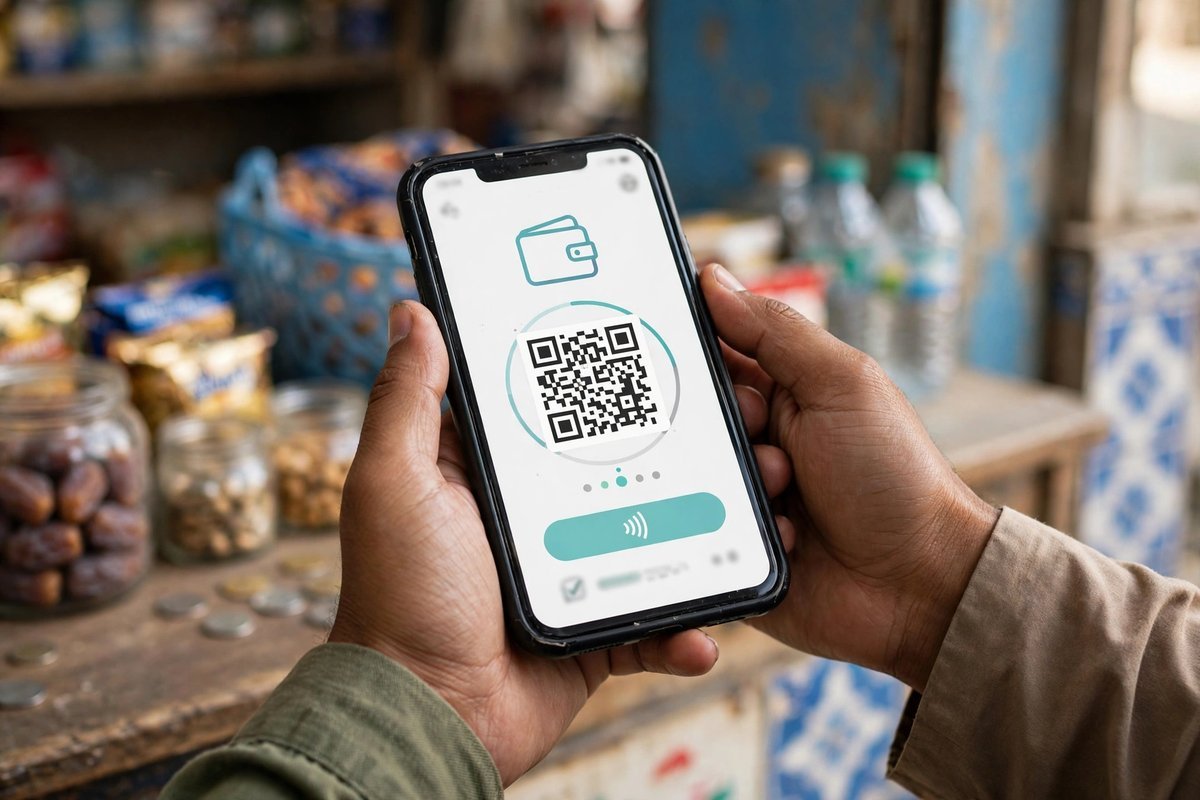
JazzCash is the mobile money service of Jazz, and Easypaisa is the mobile money service of Telenor Bank. Both are branchless banking wallets: you open an account on your mobile number, verify it with your CNIC, and then you can receive money, send money, pay bills, buy mobile balance and move funds to a bank account — all from the app, without visiting a bank branch. Both also have large agent networks: small shops across the country where you can deposit cash into your wallet or withdraw it, which matters a lot if you live somewhere with no bank branch nearby.
Fees: the only fee table you should trust is inside the app
Here is a warning. You will find blog posts all over the internet quoting exact JazzCash and Easypaisa charges — so much per transfer, so much per cash withdrawal — and many are years out of date. Both wallets revise their schedules, run promotions that waive certain charges, and price some services differently depending on your account level. Quoting a number from memory, or from another blog, is how sellers budget wrongly.
So before you commit, open the app and check its current fee schedule for the three operations you will actually do: receiving money, moving money onward to a bank or another wallet, and cashing out at an agent — the step sellers most often forget to price in. Check those three, for both wallets if you have both, and the cheaper route for your pattern will be obvious. It takes five minutes and it beats any article, including this one, because it is current.
Limits: your verification level matters more than the brand
The second thing sellers ask about is limits — how much can sit in the wallet, and how much can move in a day. Here again, the brand matters less than your own account status. Both wallets operate tiered accounts: a basic account opened with minimal detail carries lower limits, while an account fully verified with your CNIC and biometric verification carries higher ones. If your payouts keep hitting a ceiling, the fix is usually completing your verification in the app, not switching wallets.
So keep your seller payout wallet fully verified before your first big sales week, not after — and if amounts near your limit arrive regularly, move money onward to your bank promptly rather than letting a balance pile up and block the next Monday payout.
Payout speed: Monday out, then minutes — usually
On our shop, the payout rhythm is fixed and published: Pakistan sellers are paid every Monday, once their balance passes Rs 1,000, after a 24-hour safety hold on each sale. That hold protects both sides — it gives a buyer time to report a genuine problem before money moves — and it is the same whichever wallet you choose. Once a payout is sent on Monday, wallet transfers within Pakistan are normally fast: the money typically appears in your wallet the same day, often within minutes.
If a payout does not appear, check the simple things first. Confirm the payout destination on your seller account matches the wallet you are checking — a single wrong digit sends money elsewhere, and that is the most common "missing payout" of all. Check your wallet's transaction history, not just its balance screen. And remember the minimum: if your balance has not yet passed Rs 1,000, nothing is late — it is simply waiting for the next Monday after you cross the threshold.
So which one should you choose?
Run through this short checklist, and the answer usually picks itself:
- Which SIM do you already use daily? The wallet tied to your main number is the one you will check, top up and troubleshoot without thinking. Convenience beats a marginal fee difference you may never actually pay.
- Which agent is nearest to you? If you cash out in person, the agent five minutes away beats the agent across town, whatever the brand. Visit both if you have both nearby and note which one is reliably open.
- Where does the money go next? If your money mostly moves onward to one particular bank, check which wallet moves it there most cheaply in the app today. If it mostly stays in the wallet for bills and mobile balance, that question barely matters.
- Who pays you outside the shop? Clients, family or buyers who pay you directly will usually already use one wallet — receiving in the wallet they already hold keeps those transfers simple.
- Is your account fully verified? Whichever wallet you pick, complete its verification now. An unverified account is a payout waiting to be delayed.
Three habits that protect every payout
First, keep your seller money separate, at least in your head and ideally in its own wallet or bank account. When payout money mixes with daily spending, you lose track of what you earned, what you spent and what you owe in record-keeping — and a seller who cannot reconcile a month cannot grow a shop.
Second, record every payout the day it lands: date, amount, wallet, and the sales it covers. A simple spreadsheet — the kind of file many of our sellers sell themselves — turns a year of Mondays into a clear income picture and makes tax or business questions far easier later.
Third, never share wallet codes or PINs with anyone claiming to "verify" or "release" your payout. No genuine platform asks for your wallet PIN, and no payout needs a fee paid to a stranger to unlock it. If someone asks, it is a scam — report it and move on.
If you have not chosen a payout destination yet, read our payments guide for the full payout schedule, then set your wallet in your seller account before your first sales week — so Monday brings money, not admin.