

Why digital products, and why now
A digital product is a file you make once and sell many times: a planner, a spreadsheet, an ebook, a set of templates, a printable. There is no stock to buy, no parcel to pack and no courier to chase. A buyer in Karachi or Canada pays, downloads the file, and the same file is ready for the next buyer. For a seller in Pakistan, that removes the two hardest parts of online selling — inventory money and delivery — and leaves the part you control: making something genuinely useful.
This guide walks the full path: choosing a product, pricing it, listing it, and getting paid. It is written by a team that sells digital products itself, so every step below is the way it actually works, not theory.
Step 1 — Start with a skill you already have
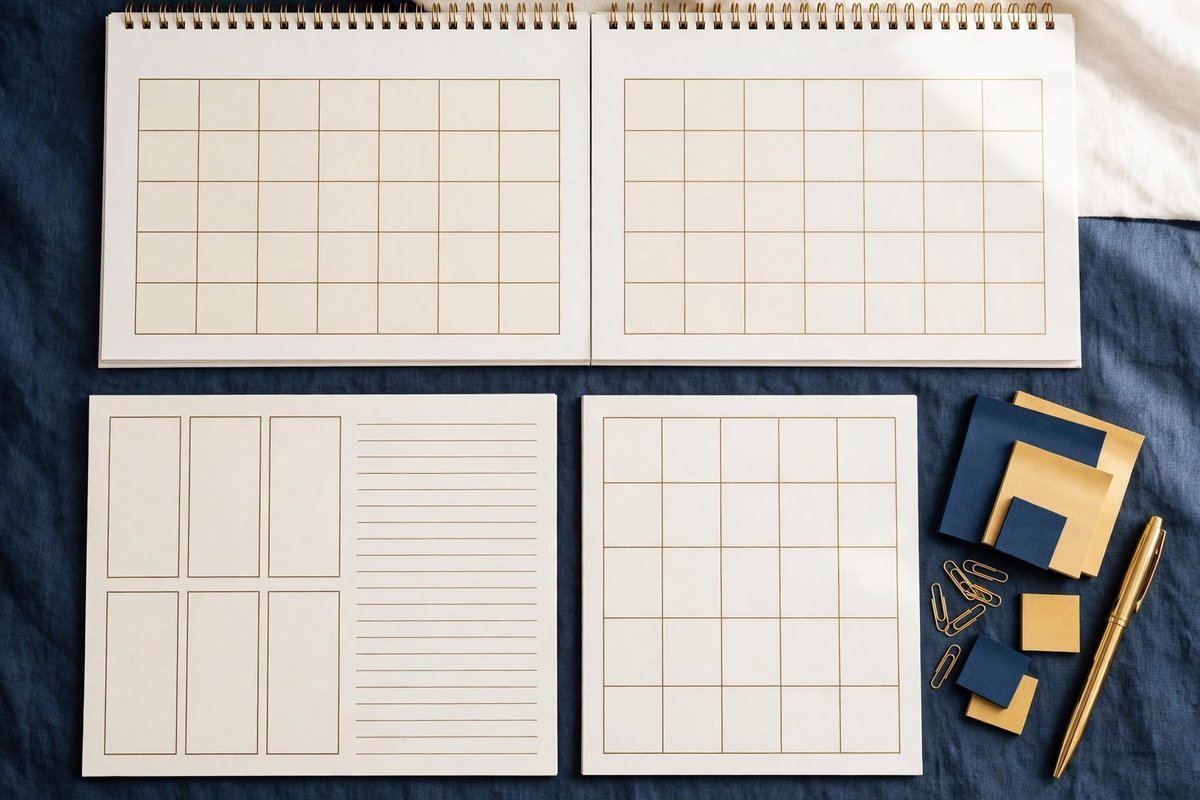
The strongest first products come from something you already do well. Teachers turn their notes and worksheets into study packs. Accountants and office workers turn the spreadsheets they built for their own job into budget and business templates. Designers sell clipart, templates and printables. Writers package what they know into short, practical ebooks. On this shop alone, products live in twenty categories — planners and productivity, business and finance, health and fitness, study notes, digital books, templates and tools, design and graphics, courses, craft patterns and more.
A simple test for a first product: does it save the buyer time, or help them earn? A wedding planner that saves a bride twenty hours of chaos passes the test. A budget spreadsheet that organises a family's whole month passes it. Decoration alone rarely does.
Step 2 — Price it in the buyer's currency, show both
Pakistani sellers often make one of two mistakes: pricing only in rupees (which shuts out international buyers) or only in dollars (which makes local buyers guess). Our shop's standard is simple — every product shows both currencies, converted at the live rate: a $10 planner shows as $10 (PKR 2,770), and a Pakistan seller's product shows Rs 2,770 (USD 10) first. Nobody has to do mental maths at the exact moment they are deciding to buy.
For the price itself, look at what similar products actually sell for on marketplaces, then place yourself honestly: a thin file at a premium price collects bad reviews; a rich, well-made file priced fairly collects repeat buyers. Your first goal is not maximum profit — it is your first sales and your first honest reviews. Prices can rise once your work is proven.
Step 3 — List it where the terms fit you
You can list on a big international marketplace, on your own store here, or — like many sellers, including us — on both. Marketplaces bring their own searching audience but charge for it in stacked fees and set rules you cannot negotiate. Your own store keeps your brand in front and your fees lower, but the visitors are the ones you bring through your socials and links. We compare the two honestly, with the real fee maths, in our guide Etsy vs Your Own Online Store.
Step 4 — Know exactly how you will be paid
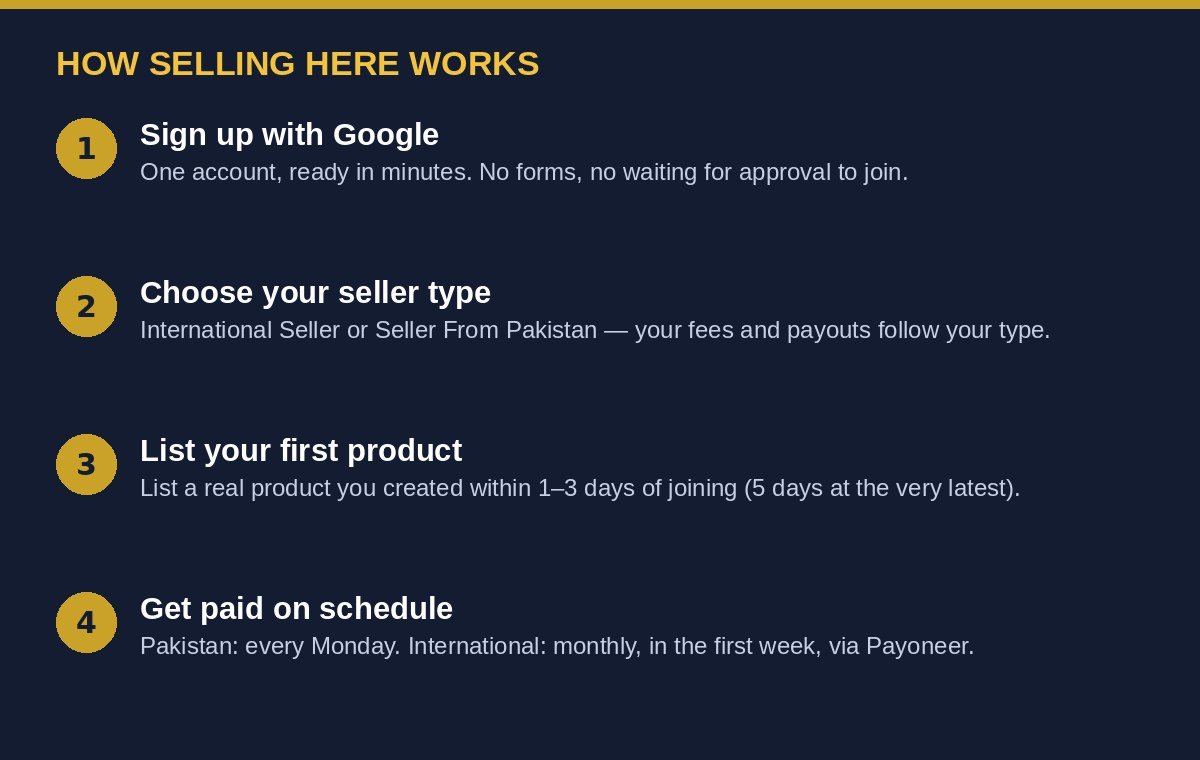
Before you list anywhere, read the payout page of the platform — not the marketing page, the payout page. Here, the model is deliberately plain. Sellers from Pakistan pay a one-time registration of Rs 500 (the first 200 places are free) and a single 7% fee that already includes the payment costs — sell for Rs 1,000 and Rs 930 is yours, paid out every Monday to JazzCash, Easypaisa or your bank once you pass Rs 1,000. International sellers pay $5 once (the first 100 places are free) and a 5% service fee, with card processing at cost; payouts are monthly in the first week, from $25, through Payoneer. Every sale sits in a 24-hour safety hold first, which protects you as much as the buyer. The full worked examples are in How Pakistani Sellers Get Paid.
Three mistakes that quietly kill new shops
- Copying instead of creating. Downloaded, resold or copied files are the fastest route to a closed account — here and everywhere. Sell what you made.
- Listing once, then waiting in silence. A listing nobody links to is a listing nobody sees. Share it — Pinterest, Instagram, Facebook, your WhatsApp status. Traffic is the seller's job on every platform.
- Perfect product, invisible page. Buyers decide from your images and first lines. Clear pictures, an honest description and a title that says what the product is will outsell a "better" product presented badly.
If you have a file on your laptop right now that other people would find useful, you are closer to your first product than you think. Start with the guide above, list it properly, and let the first review teach you the rest.